
The Ruins
From Industrial Powerhouse to Cultural Landmark.
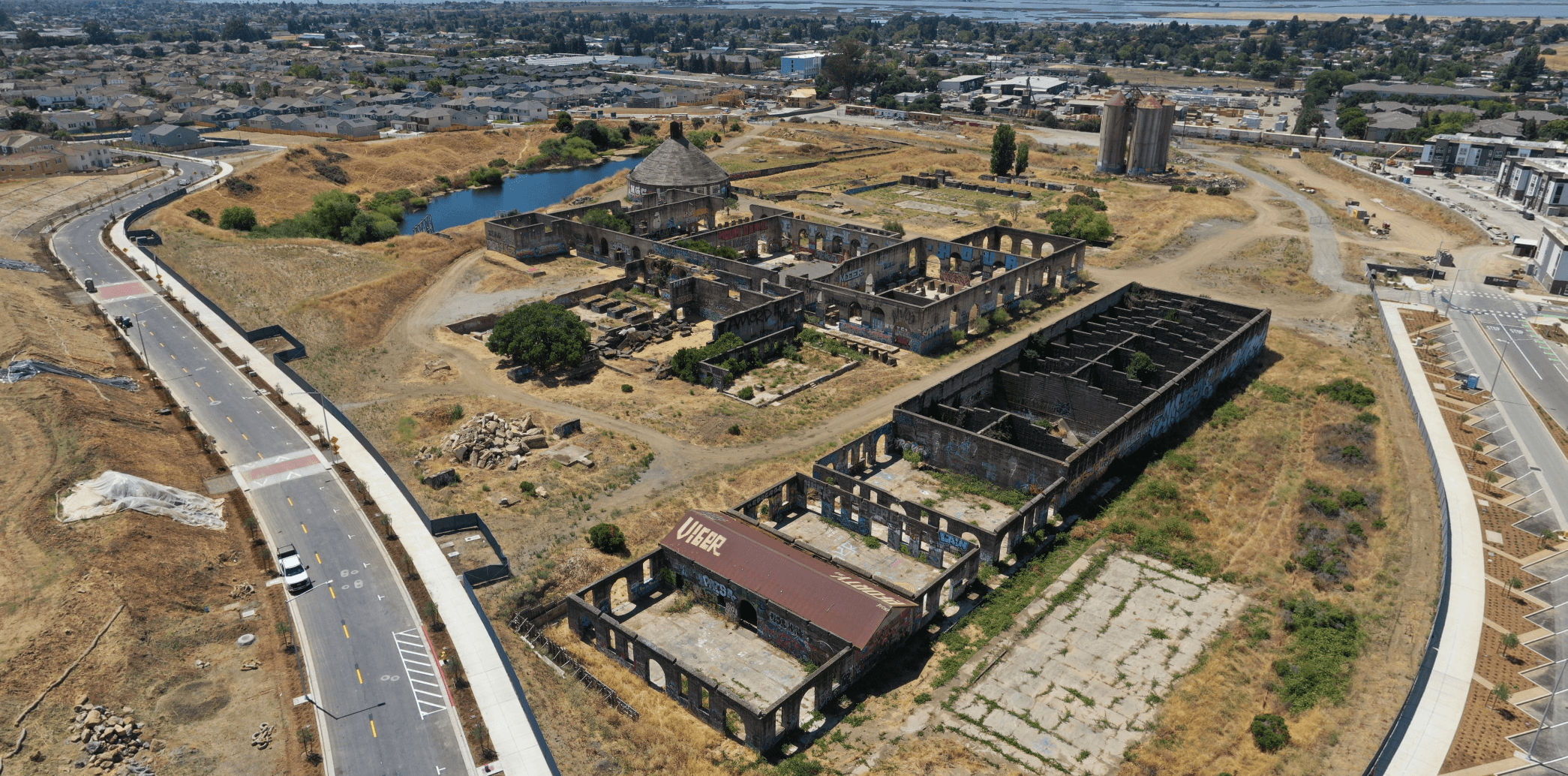
Thirty five acres of concrete, steel, and open sky in the heart of Napa Valley — an ever-changing canvas where art, music, and history converge.
The Story
Before The Ruins
Before anyone imagined a cement plant, this land was part of the indigenous landscape of the Napa Valley region. In the 1840s, under Mexican rule, the area became part of Rancho Suscol — an 84,000-acre land grant given to General Mariano Vallejo.
In the 1850s, the Watson family homesteaded here, giving rise to 'Watson Ranch' and 'Napa Junction.' Augustus Watson recognized the limestone and clay deposits on his property. Around 1900, he formed the Napa Junction Company to extract and crush rock.
1902 – 1978
The Factory
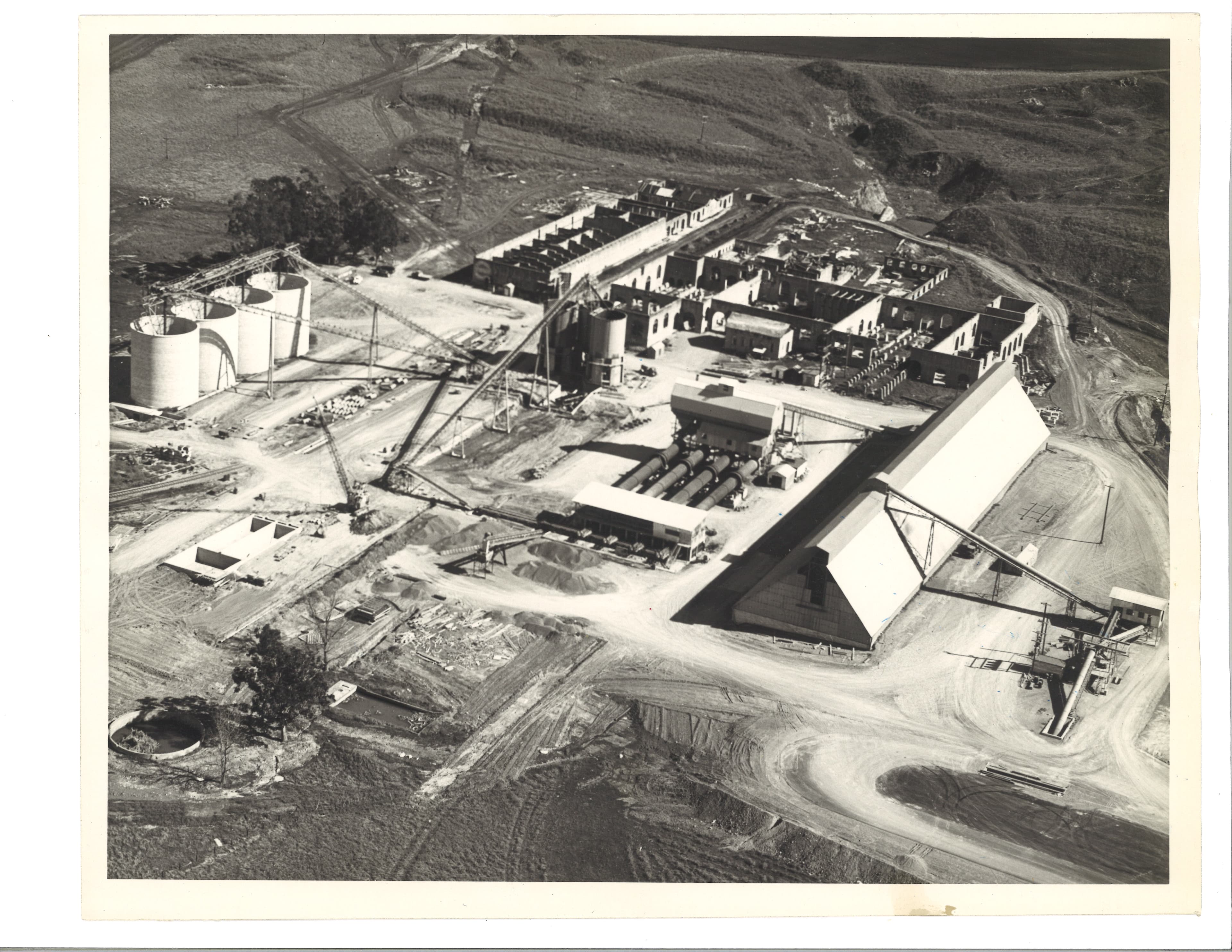
In 1902, the Standard Portland Cement Company built an industrial campus here with ten massive kilns producing 2,000 barrels of cement daily. This cement helped rebuild San Francisco after the devastating 1906 earthquake and fire.
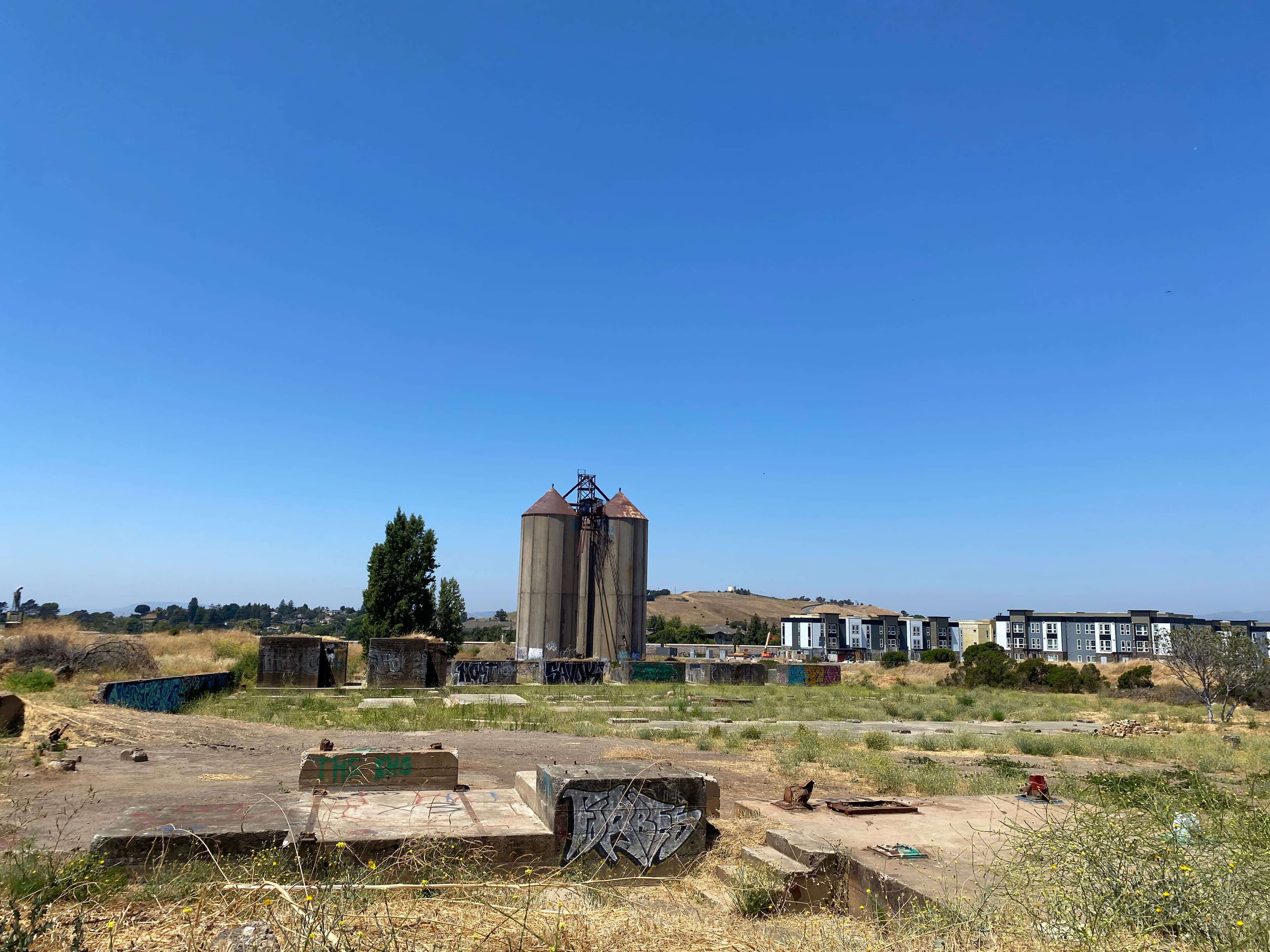
Through the Great Depression and two World Wars, the factory supplied critical infrastructure across the Bay Area. In 1946, the Basalt Rock Company took over, adding the iconic 90-foot silos. The plant closed in 1978, and nature began reclaiming the concrete.
"Don't Ruin The Ruins."
Timeline
A Century of Change
Sustainability
Building on History,
Preserving the Future
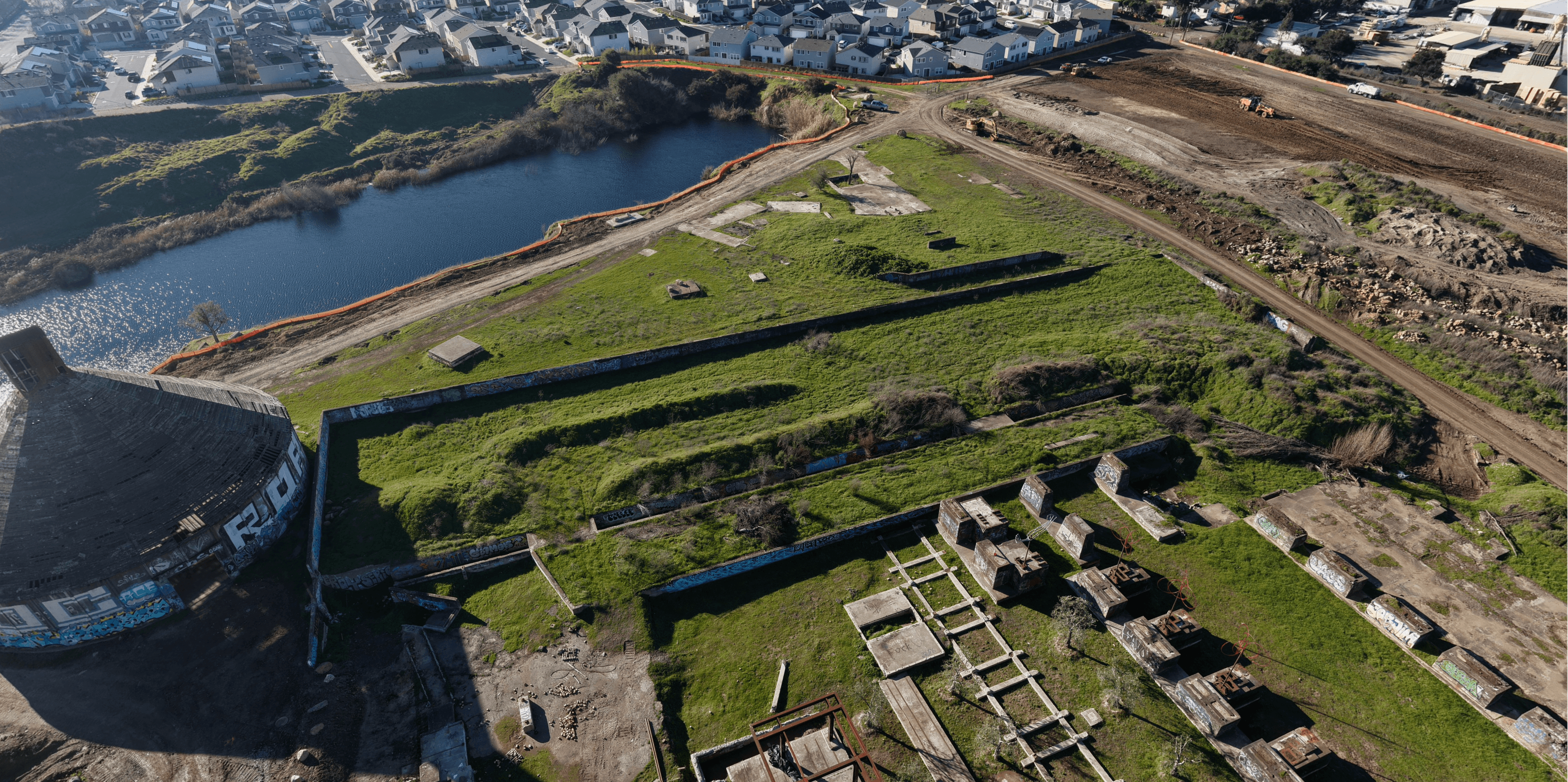
The Ruins embodies sustainability at its core — preserving and repurposing historic industrial structures rather than demolishing them, and protecting the surrounding landscape for future generations.
Reuse & Recycle
Preserving and repurposing historic structures. The Douglas Fir RMD Fence was built using wood reclaimed from the Napa Fire.
Conservation Easement
321 acres under permanent conservation, adding to over 3,000 acres of adjacent protected open space.
Open Space
31 acres of parks and trails, River-to-Ridge and Napa Valley Vine trail extensions, and a 10-acre site for a new elementary school.
Community
Giving Back to American Canyon
The Ruins is more than a venue — it's a community anchor. Through partnerships, fundraisers, and programming, we invest in the people and organizations that make American Canyon home.
31
Acres of Parks & Trails
10
Acres for New Elementary School
321
Acres Under Conservation
2
New Public Parks
Community Events
American Canyon Community and Parks Foundation (ACCPF) annual fundraiser
Turn on the Lights
Arts in April & Artist Workshops
Plein Air Painting Classes
Private community celebrations